The information on this website is general in nature and does not take into account your objectives, financial situation, or needs. Consider seeking personal advice from a licensed adviser before acting on any information.
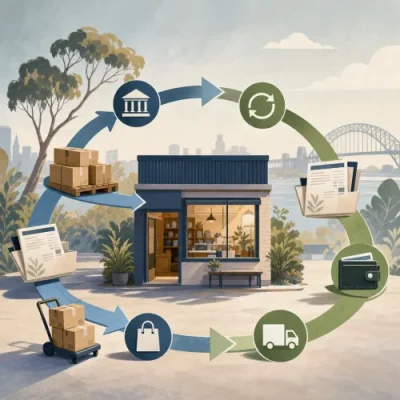
Working capital finance and business lines of credit can help Australian businesses manage short-term cash flow needs, seasonal expenses and timing gaps between income and outgoings. This guide explains how these facilities work, how they differ from standard business loans, and what to consider before applying.
Working capital finance and a business line of credit are forms of short term business finance designed to help businesses manage day-to-day cash flow. They are commonly used for expenses such as wages, supplier invoices, inventory, tax obligations, seasonal stock purchases or temporary gaps between completing work and being paid.
These products can be useful, but they are not all the same. The right structure depends on your business model, revenue cycle, borrowing purpose, repayment capacity and lender criteria. This article explains how working capital finance and business lines of credit work for Australian businesses, how they differ from standard term loans, and what to consider before making an enquiry. If you are still exploring broader business finance options, it may help to understand these products before comparing facilities.
What is working capital?
Working capital is the money available to cover the everyday operating costs of a business. In simple terms, it is the difference between short-term assets, such as cash, receivables and stock, and short-term liabilities, such as supplier bills, wages, rent, tax and loan repayments.
A business can be profitable but still experience working capital pressure. For example, a builder may have several profitable jobs underway but still need to pay subcontractors and suppliers before clients make progress payments. A retailer may need to buy stock ahead of a busy trading period before the sales revenue comes in.
Working capital finance is intended to help manage these timing gaps. It is generally not designed for long-term asset purchases or major capital investments, although each provider will have its own acceptable loan purposes and assessment criteria.
How working capital finance works
Working capital finance is a broad term rather than one single product. It can include unsecured business loans, secured loans, invoice finance, merchant cash advance-style facilities, overdrafts and revolving credit facilities. In many cases, businesses use the term to refer to a short-term loan or facility that provides funds for operational needs.
A typical working capital facility may involve:
- A defined funding amount: the lender approves an amount based on the business's financial position, cash flow and risk profile.
- A short to medium repayment period: some facilities are repaid over a set term, while others are more flexible.
- Interest and fees: costs vary by lender and may depend on security, business trading history, revenue, credit profile and facility type.
- A stated business purpose: lenders generally want to understand why funds are needed and how the business expects to repay them.
Some working capital finance is provided as a lump sum, similar to a standard business loan. Other forms are more flexible, allowing funds to be accessed as needed. That is where business lines of credit become particularly relevant.
How a business line of credit works
A business line of credit is a revolving credit facility. Instead of receiving one lump sum and repaying it over a fixed schedule, the business is approved for a credit limit and can draw funds up to that limit when needed.
As the business repays amounts it has drawn, those funds may become available to use again, subject to the facility terms. This revolving structure can make a line of credit useful for recurring cash flow needs, irregular expenses or seasonal operating cycles.
For example, a wholesaler may use a line of credit to buy stock before peak demand, then repay the balance as customers pay their invoices. A professional services firm may use the facility to cover wages during a period when several large invoices are outstanding.
Depending on the lender and product, a business line of credit may be secured or unsecured. It may have a variable interest rate, a facility fee, drawdown fees, monthly fees or other charges. Some facilities charge interest only on the amount drawn, not the full approved limit, but this depends on the product terms.
Working capital finance versus a business line of credit
The terms are sometimes used together, but they are not identical. Working capital finance describes the purpose of the funding: supporting operational cash flow. A business line of credit describes one possible structure: a revolving facility that can be drawn, repaid and drawn again.
| Feature | Working capital loan | Business line of credit |
|---|
| How funds are accessed | Often paid as a lump sum | Drawn as needed up to an approved limit |
| Repayment structure | Usually repaid over an agreed term | Repayments may restore available credit, depending on the facility |
| Common use | Known short-term expense or defined cash flow need | Ongoing or recurring cash flow flexibility |
| Interest charges | Often based on the loan balance | May apply to the drawn balance, plus any facility fees |
| Flexibility | Generally less flexible once funds are advanced | Generally more flexible if the business needs repeated access to funds |
A standard term loan may be better suited to a known purchase or project with a clear cost and repayment plan. A line of credit may be more suitable where the timing and size of cash flow needs vary. Suitability depends on the business and the lender's assessment, not simply the product label.
When Australian businesses may use cash flow finance
Cash flow finance can be considered where the funding need is short-term, operational and linked to business activity. Common examples include:
- covering payroll while waiting for customer payments;
- buying inventory before a seasonal sales period;
- paying suppliers early to maintain trading relationships;
- managing a temporary drop in revenue;
- covering BAS, tax or insurance timing gaps where appropriate;
- funding small growth opportunities that rely on quick access to cash;
- bridging the gap between completing work and receiving invoice payments.
These facilities are not a substitute for sustainable cash flow management. If the business is repeatedly using debt to cover ordinary expenses without a realistic repayment pathway, it may indicate a deeper pricing, cost, debtor management or profitability issue.
Secured and unsecured options
Working capital finance and business lines of credit may be secured or unsecured. A secured facility involves some form of security, such as property, business assets or other collateral accepted by the lender. An unsecured business loan or unsecured line of credit does not rely on the same type of asset security, although directors may still be asked to provide guarantees or meet other conditions.
Security can affect the amount available, pricing, risk and documentation requirements. Unsecured facilities may be faster or simpler in some cases, but they can also involve different limits, fees, interest rates or eligibility requirements. The terms depend on the lender, product and individual circumstances.
How lenders may assess these facilities
Lenders generally want to understand whether the business can afford to repay what it borrows. Assessment criteria vary, but lenders may consider:
- business trading history and industry;
- turnover, profit margins and cash flow patterns;
- bank statements and transaction conduct;
- existing debts and repayment commitments;
- director credit history and business credit profile;
- ATO position and tax obligations;
- the purpose of the funds;
- available security, if the facility is secured;
- how seasonal or irregular revenue affects repayment capacity.
Some lenders place more weight on recent bank statement activity, while others require financial statements, tax returns, BAS, aged debtor reports or forecasts. If you are preparing to apply, it can be useful to review your financial records and borrowing purpose before speaking with a lender or broker. For broader preparation steps, see the guide on how to prepare your small business for a successful loan application.
Costs, repayments and drawdown planning
The cost of working capital finance can include more than the headline interest rate. Depending on the facility, costs may include establishment fees, monthly account fees, line fees, drawdown fees, early repayment fees, late payment fees or valuation and legal costs for secured facilities.
For a term-style working capital loan, repayment planning usually focuses on whether the business can afford regular repayments across the agreed loan term. For a line of credit, planning also needs to consider when funds will be drawn, how long balances may remain outstanding and whether the business can reduce the balance after the cash flow gap closes.
Before committing, consider modelling different repayment or utilisation scenarios. A business that draws only occasionally may face a very different cost outcome from one that keeps the facility close to its limit for long periods. You can use the available business loan calculators as a starting point for thinking through repayment scenarios, while remembering that actual lender pricing and fees depend on provider criteria and your circumstances.
Benefits and limitations of a revolving credit facility
A revolving credit facility can offer flexibility, but it also requires discipline. The main advantage is access to funds when needed, without applying for a new loan each time a short-term cash flow need arises. This can help businesses respond to timing gaps, seasonal costs or unexpected operating expenses.
However, the same flexibility can become a risk if the facility is used to cover ongoing losses or if the balance is not reduced when cash comes in. A line of credit should generally be managed as part of a broader cash flow plan, not treated as permanent working capital unless the business has assessed the cost and risk carefully.
Potential limitations include:
- fees that apply even when the facility is not fully used;
- interest rate changes, particularly for variable-rate facilities;
- review periods where the lender may reassess the facility;
- requirements to provide updated financial information;
- the risk of relying on debt rather than resolving cash flow problems;
- personal or director guarantees, depending on the arrangement.
Questions to ask before applying
Before applying for working capital finance or a business line of credit, it is worth asking practical questions such as:
- What specific cash flow gap or business need will the funding address?
- Is the need temporary, seasonal, recurring or structural?
- Would a lump sum loan or revolving credit facility better match the cash flow cycle?
- How quickly can the business repay amounts drawn?
- What fees apply when the facility is opened, used, unused or closed?
- Is security required, and what are the implications for the business or directors?
- What information will the lender need to assess the application?
- How would the business manage repayments if revenue is delayed?
- Could invoice collection, supplier terms or expense management reduce the need to borrow?
These questions can help you compare the structure of the facility, not just the advertised rate or credit limit.
How brokers can help compare product structures
Business finance products can vary significantly between lenders. One lender's working capital loan may operate like a simple term loan, while another provider may offer a revolving credit facility, overdraft-style arrangement or invoice-linked funding. Eligibility, security requirements, fees, documentation and repayment terms can also differ.
A broker may help explain available options and match enquiries to lenders or products that fit the stated business need, subject to lender criteria. If you want support comparing business funding structures, you can learn more about the site's broker referral partners. Any finance decision should still be based on your business's circumstances, objectives and ability to repay.
Key takeaways
Working capital finance helps businesses manage short-term operational funding needs. A business line of credit is one way to access that funding through a revolving facility that can be drawn and repaid over time.
For Australian businesses, the choice between a lump sum working capital loan, a business line of credit or another form of cash flow finance depends on the funding purpose, timing of revenue, repayment capacity, security available and lender requirements. Understanding how the facility works before applying can help you ask better questions and avoid taking on a structure that does not match your cash flow cycle.
Published: Wednesday, 26th Aug 2026
Author: Paige Estritori




No comments yet. Be the first to share your thoughts.